Seal guide
Floating roof seal types: a practical guide
A floating roof rises and falls with the liquid, so a ring-shaped gap always remains between the roof edge and the tank shell. The rim seal closes that gap. It limits vapor loss, helps keep the roof centered, and keeps rain and dirt out of the rim space.
The shell is never perfectly round, so the seal must keep contact as the gap changes around the circumference and between fill levels.
Primary and secondary seals
Most floating roofs use two seals, one above the other.
- Primary seal: the lower seal. It closes the rim space.
- Secondary seal: an added seal on the roof rim above the primary. It catches vapor that gets past the primary, shields the primary from weather and covers small gaps or tears.
Trade-off: a secondary seal can reduce usable tank capacity, because it must stay in contact with the shell or clear the fixed roof when the tank is full.
Primary seal types
Mechanical shoe seal
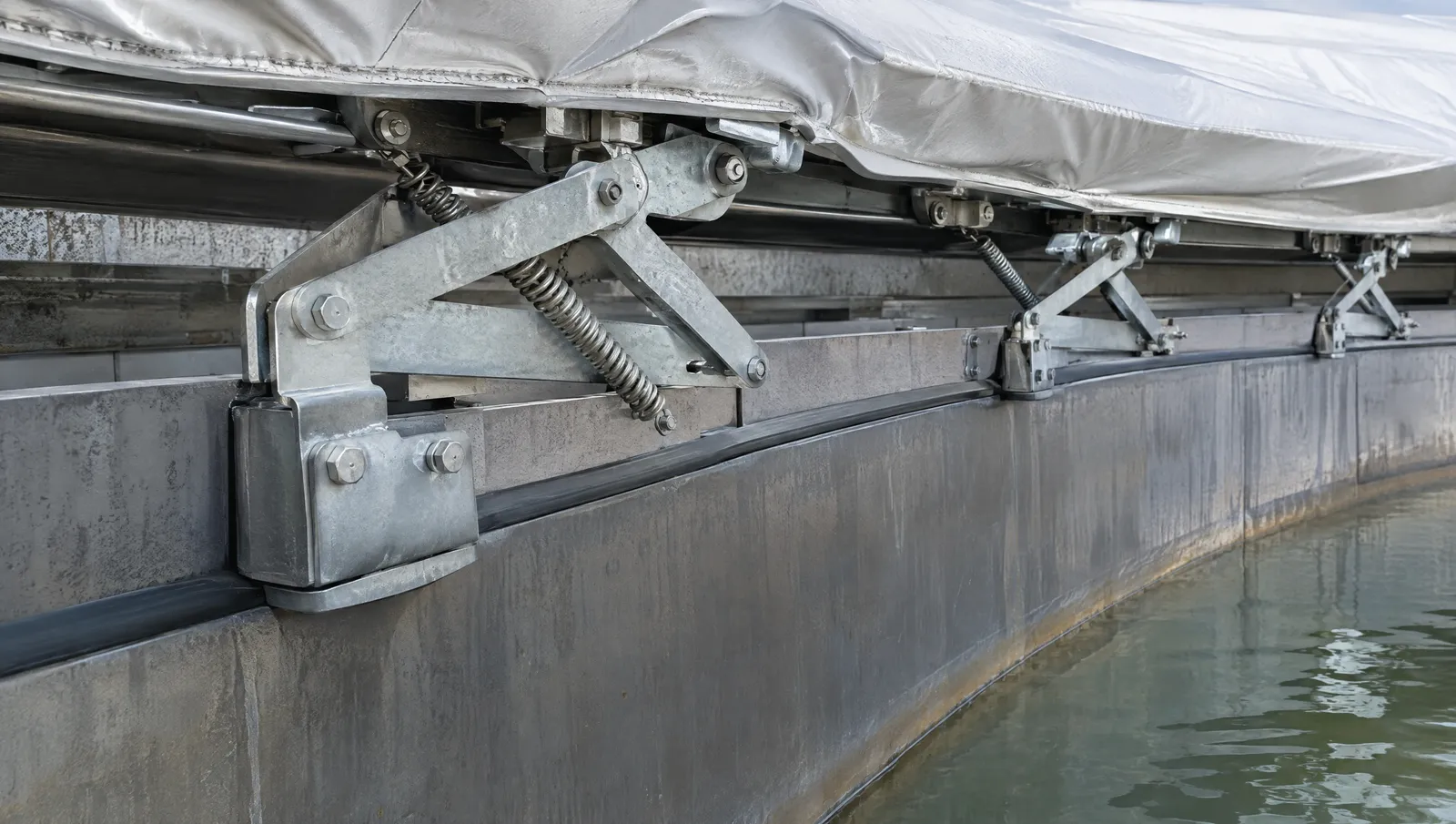
A vertical metal sheet (the shoe) is pressed against the shell by springs or weighted levers and connected to the roof by braces or hangers. A flexible vapor-barrier fabric runs from the shoe to the roof. The bottom of the shoe reaches into the liquid.
It follows out-of-round shells well and only metal touches the product. Not suited to lined tanks.
Liquid-mounted seal
A foam-filled or liquid-filled envelope in contact with the liquid surface all the way round. This removes most of the vapor space under the seal. The material must be compatible with the stored product.
Vapor-mounted seal
A resilient seal (foam or a flexible wiper blade) mounted above the liquid surface, so a vapor space remains underneath. Inexpensive and quick to install. Under US rules it is typically allowed only as the lower seal of a two-seal system.
How shoe seals are held against the shell
Pantograph
A hanger linkage that lets the shoe follow changes in the rim space, with springs, weights or both supplying the force. The most widely used shoe design.
Scissor
Scissor-style links plus springs keep the full height of the shoe in contact. Lighter than a weighted design and often chosen for light, volatile or corrosive products.
Secondary seal types
| Type | What it is |
|---|---|
| Rim-mounted | Mounted on the roof rim and covers the entire rim space. More effective at cutting losses than a shoe-mounted secondary. |
| Shoe-mounted | Attached to the primary shoe. Used with mechanical shoe primaries. |
| Weather shield | A cover over the primary seal that protects it from sun, dust, debris and rain. |
- Most secondary seals use spring plates that press a wiper tip against the shell.
- Double-layer wipers need less tip pressure.
- Roller-assisted versions help stop a seal from rolling over on old, out-of-round tanks.
Primary seal types compared
| Property | Mechanical shoe | Liquid-mounted | Vapor-mounted |
|---|---|---|---|
| Where it sits | Metal shoe against shell, bottom in liquid | Envelope on the liquid surface | Above the liquid |
| Vapor space under seal | Small, sealed by fabric | Almost none | Yes |
| Strengths | Handles shell irregularities; only metal touches the product | Most vapor control of the three | Low cost, fast to install |
| Watch for | Corrosion, damaged linkage or fabric; not for lined tanks | Material compatibility with the product | Needs a secondary seal under US rules in most cases |
Why gaps matter
Under US rules for external floating roofs, the gap between seal and shell is measured and compared to limits.
| Seal | Max total gap area | Max single gap width |
|---|---|---|
| Primary (shoe or liquid-mounted) | 212 cm² per m of tank diameter | 3.81 cm |
| Secondary | 21.2 cm² per m of tank diameter | 1.27 cm |
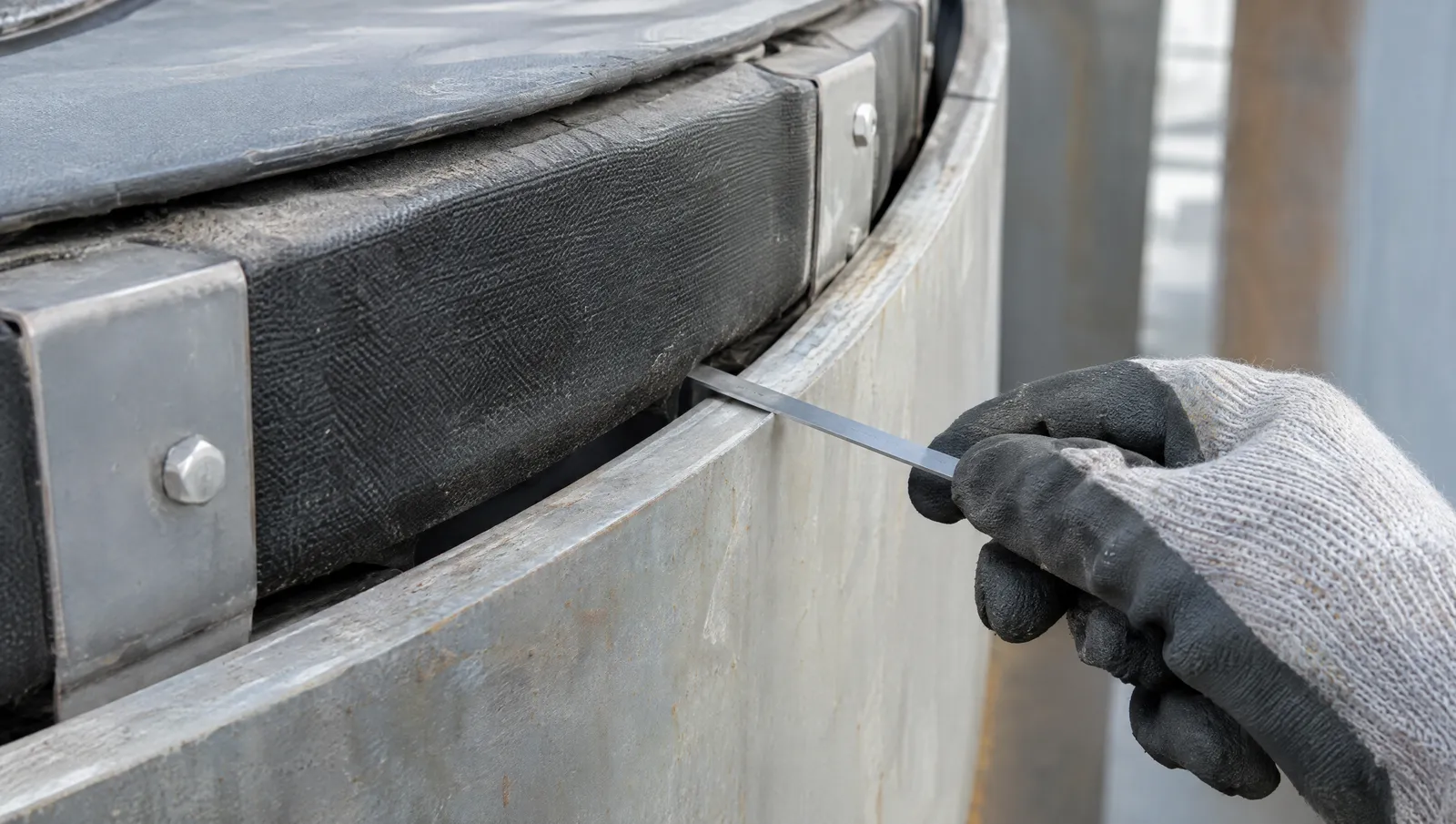
Gaps are found with probes. Each gap's width is multiplied by its length around the circumference, the areas are added up and divided by the tank diameter.
Holes, tears or openings in seal fabric must be repaired.
Primary seal gaps are measured within 60 days of first fill and at least every 5 years. Secondary seal gaps are measured within 60 days of first fill and at least once a year.
What inspectors look for
- Gaps measured and recorded with location, width and length.
- Continuous contact between each seal and the shell.
- Tears, holes, wear or exposed reinforcement in fabric and wipers.
- Corrosion, bending or jamming in shoes, linkages and supports.
- Liquid or residue in the rim space.
- Intact shunts and continuous electrical bonding.